The Founder
Anonymous by choice. Traceable by work, systems memory, and the standards carried forward.

A technical life lived across generations
The founder’s public identity is intentionally restrained for now. The work is not. XERXES SI, SIDE, Dash X, and this Lattice are presented as systems to inspect rather than personality claims to believe.
The founder states that the current XERXES SI systems and the architectural direction behind them have, to date, originated in his own design and development work. This is an origin claim, not a statement about future team size or outside contribution.
His technical formation spans the period when networking labs, printed references, local user groups, thick computer magazines, boxed software, shell access, and late-night experimentation were ordinary parts of becoming technically literate.
The founder prefers evidence that can be inspected: working systems, documented architecture, reproducible releases, and a technical lineage that explains why particular design choices exist.
Founder publications // primary-source systems thinking
The strongest way to evaluate the founder’s technical philosophy is to inspect the work itself. These publications preserve the original sources while exposing their arguments as navigable, machine-readable knowledge.
The Work We Never Needed to Do
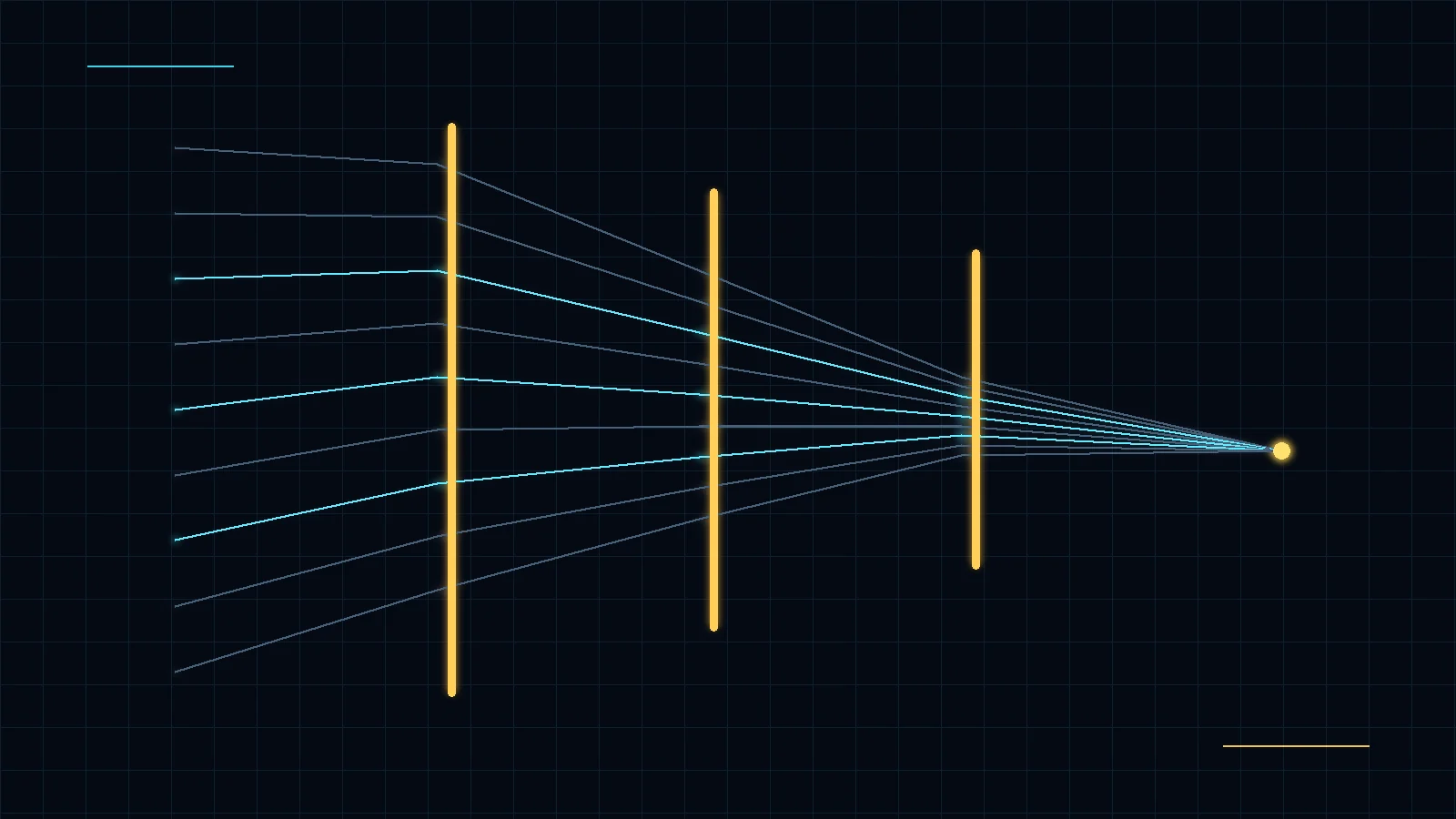
A systems-history essay on graphics, translation, specialization, deferred rendering, runtime adaptation, and the central XERXES SI question: how much expensive computation can be proven unnecessary before it begins?
ENTER →
The Lattice Was Never A Wiki
Why XERXES Lattice is designed as a machine-readable epistemic interface—with identity, provenance, claims, relations, revisions, and multiple representations—rather than a conventional content archive.
ENTER →
The Experts Who Would Have Stopped The Machine
A founder argument for evidence, experiments, falsifiability, competition, and advisers who can update when measured results contradict inherited assumptions.
ENTER →
A Weekend With Python Does Not Make You Steve Jobs
The difference between making a prototype work and building a complete production system that survives users, security, accessibility, deployment, operations, governance, and maintenance.
ENTER →
Clean Systems Win
A case for opening the box, understanding the substrate, preserving institutional memory, and converting hard-won lessons into standards that make every subsequent system cleaner.
ENTER →
Beyond D2
A falsifiable research monograph separating established receptor pharmacology and patient-safety evidence from a proposed 5-HT2A/D2-D3 systems hypothesis in dopamine-agonist treatment.
ENTER →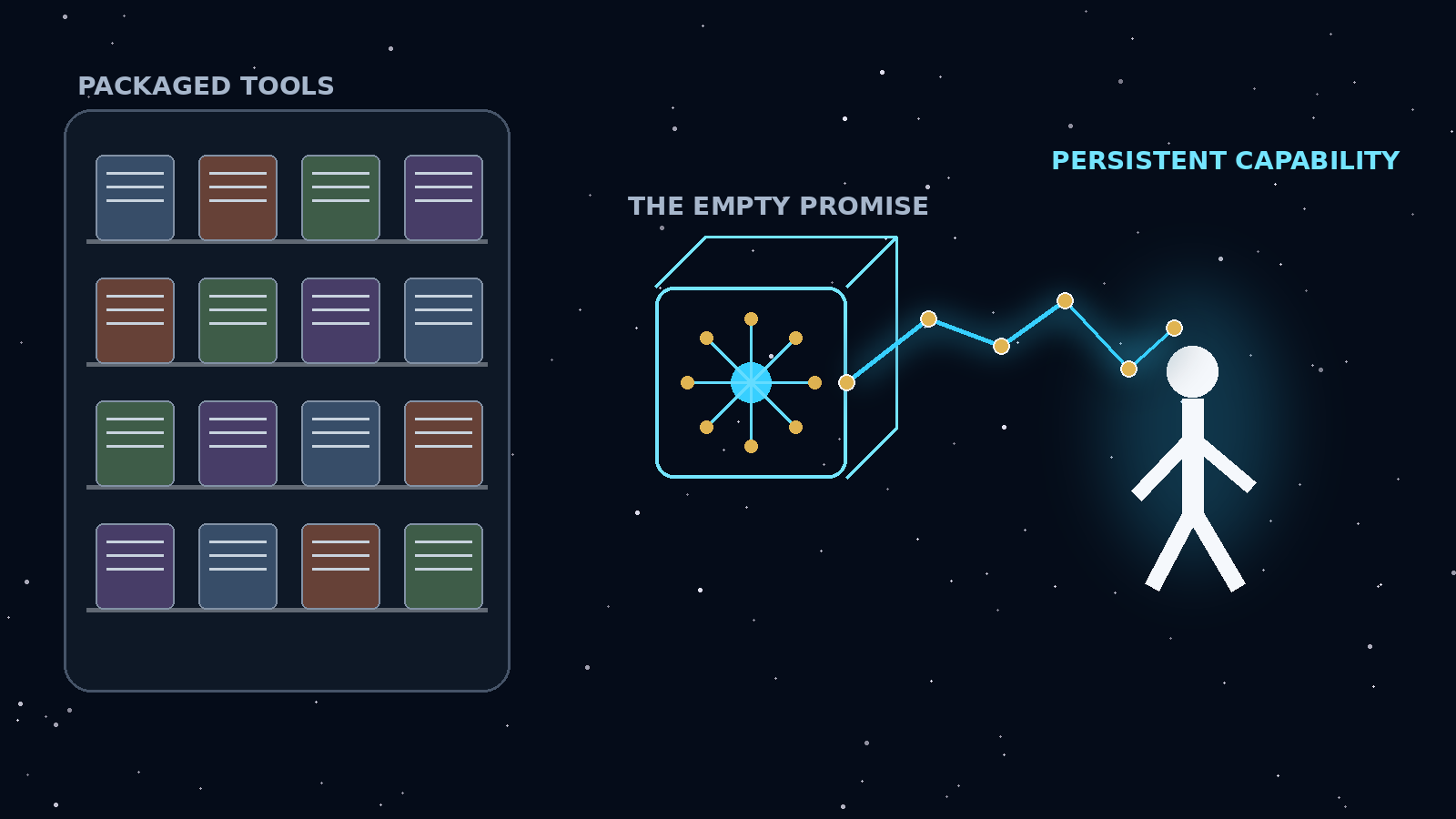
There Was Never an Expert in the Box
Why packaged software historically sold tools rather than expertise—and why persistent intelligence may shift computing from feature delivery toward intent, contextual teaching, institutional memory, trustworthy action, and human capability formation.
ENTER →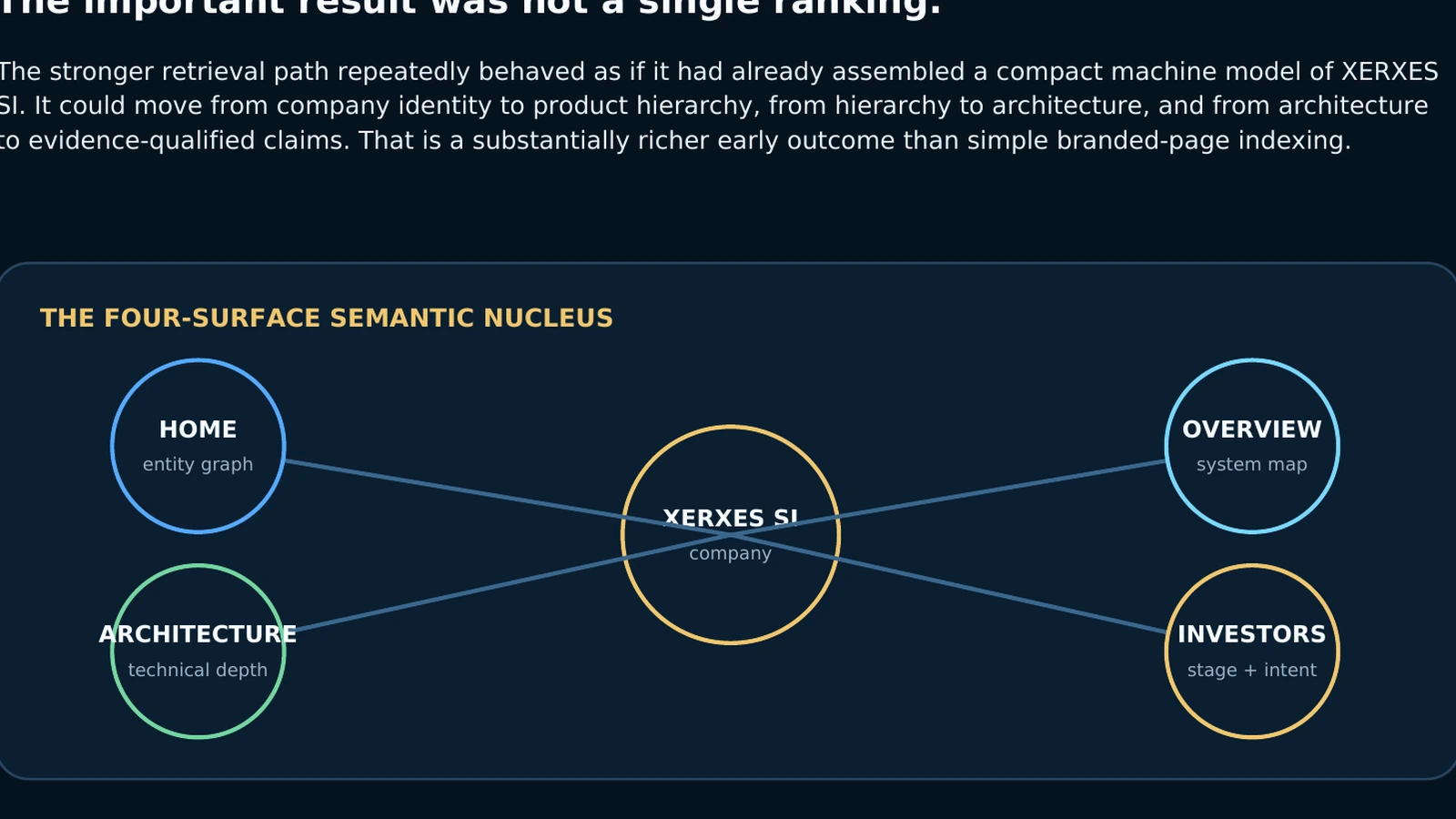
Data Points Proof of Concept
A source-preserved benchmark report on first-day semantic formation: repeated four-surface recovery, architecture-level passage retrieval, product-graph reconstruction, evidence-status preservation, and explicitly scoped control comparisons.
ENTER →Each essay can be read normally, opened as its preserved source or illustrated PDF edition, copied as Markdown, inspected as JSON-LD, and traversed through governed Lattice fragments and related objects.
The lineage is the introduction
Networking before abstraction
Founder-reported early Cisco Networking Academy participation sits inside a period when routing, addressing, cabling, failure, and topology were taught as visible machinery.
FOUNDER-REPORTED →Programming before the career label
Founder-reported college-level C++ coursework before high-school age is included as formation context, not as a credential substitute for the systems now available to inspect.
FOUNDER-REPORTED →Infrastructure had consequences
Hosting and domain operations made uptime, repeatability, ownership, rollback, customer impact, and the ugliness of one-off servers practical concerns rather than architecture diagrams.
FOUNDER-REPORTED →Plural technical tribes
GNU, Linux, BSD, security, 2600 culture, workstation history, hardware experimentation, and academia are treated as intersecting traditions—not costumes and not mutually exclusive loyalties.
PUBLIC PROFILE →Formation before the current AI era
The founder reports participating in an early Cisco Networking Academy program, meeting Cisco executives on stage at graduation, and taking college-level C++ programming coursework before reaching high-school age.
Cisco’s own history places the Networking Academy launch in 1997, beginning with a small set of U.S. schools before expanding globally. The public history corroborates the era and program context; it does not independently verify the founder’s personal participation.
The founder reports years of hosting and domain operations serving both commercial and personal sites. That operations background is treated inside XERXES as a reason to value deterministic deployment, clean rollback, explicit ownership, and repeatable server construction over one-off machine craftsmanship.
Foundation memory // keep one hand on the substrate
The founder’s technical self-description spans eras that are usually separated into museum cases: AT&T UNIX; UNIX-like and BSD systems; Slackware; OpenBSD and OpenSSH; BeOS; NetWare-era networks; physical media; workstations; early networking culture; telephone infrastructure; and the modern return to small, heterogeneous compute.
The founder reports keeping an actual AT&T UNIX system or historical UNIX installation/artifact in his possession and using old equipment rather than merely reading about it. The stated purpose is continuity: to remember what modern layers are built on and which constraints abstraction has hidden rather than eliminated.
AT&T UNIX
Small tools, inspectable interfaces, portability, and durable structure.
TRACE →OpenBSD + OpenSSH
Secure remote operation, audit culture, reduced attack surface, and conservative boundaries.
TRACE →BeOS
Multithreading, multimedia ambition, responsive interaction, and coherent product thinking.
TRACE →Novell NetWare
A network operating-system era that made directories, clients, servers, protocols, and administration visible.
TRACE →Biology, genetics, and cloning // information with context
The founder also reports sustained study of biology, genetics, and cloning technology. That biological lens is used carefully: not to claim that software and living systems are equivalent, but to ask better questions about replication, inheritance, repair, environment, adaptation, state, and emergent behavior.

Replication is not the same as understanding
DNA is a useful visual anchor for thinking about encoded information, copying, variation, repair, and environment—without pretending biology and software are equivalent.
The Lattice treats cross-domain analogy as a reasoning instrument, not a license to flatten disciplines. Similar words can hide different mechanisms.
Signals across domains // telephone, radio, light, sound, biology
The founder reports studying telephone infrastructure, radio technology, laser and optical systems, sound/audio technology, biology, and cloning technology as part of a long-running cross-domain systems interest.
The value is not to collapse those disciplines into one metaphor. It is the opposite: each discipline teaches where metaphors break. Telephony teaches signaling and control planes. Radio teaches shared physical resources. Optics teaches alignment and loss. Acoustics connects pressure and measurement to perception. Biology makes context, regulation, replication, and variation impossible to ignore.
Telephone infrastructure
Switching, signaling, reliability, and the control-plane lesson.
OPEN SOURCE ↗LINEAGEexternal sourceRadio + spectrum
Shared medium, propagation, interference, and finite resources.
OPEN SOURCE ↗LINEAGEexternal sourceLaser + optics
Alignment, loss budgets, measurement, and light as infrastructure.
OPEN SOURCE ↗LINEAGEexternal sourceBiology + cloning
Replication, identity, regulation, context, and the limits of analogy.
OPEN SOURCE ↗Craft, curiosity, and simplicity // people are context, not saints
The founder studies the people and stories around technology as design context, while avoiding personality cults. Steve Wozniak’s blue-box history is interesting because it shows obsessive systems curiosity. Steve Jobs’s public record is interesting because it connects craft, product coherence, tools, NeXT, fit-and-finish, and a search for simplicity that included a 1974 trip to India intending to visit Neem Karoli Baba, widely called Maharaj-ji.
Those histories are not offered as endorsements, spiritual claims, or founder identity clues. They are examples of a broader question: how do technical depth, human meaning, aesthetic restraint, curiosity, and disciplined execution become one coherent artifact?
The useful lesson from the past is not “be the next person.” It is that a technologist is allowed to care about the circuit, the operating system, the typography, the sound, the human ritual, and the meaning of the thing at the same time.
Wozniak + Jobs blue-box artifact
Historical object and Wozniak recollection preserved by the Computer History Museum.
OPEN SOURCE ↗SMITHSONIANamericanhistory.si.eduSteve Jobs oral history
Tools, education, NeXT, networking, fit-and-finish, and responsibilities of technology.
OPEN SOURCE ↗ORIENTATIONen.wikipedia.orgNeem Karoli Baba
Canonical spelling and historical orientation to the teacher often called Maharaj-ji.
OPEN SOURCE ↗ORIENTATIONen.wikipedia.orgSteve Jobs // India context
Neutral orientation to Jobs’s 1974 India trip intending to visit Neem Karoli Baba.
OPEN SOURCE ↗Civilization design // the founder’s unifying frame
The founder describes the work as civilization design: make the technology coherent enough that people can build lives and institutions on it, and grounded enough that future builders still know how the lower layers work.
That frame makes beauty, simplicity, efficiency, effectiveness, maintainability, security, provenance, and community parts of one design problem. A beautiful interface that cannot be operated is decoration. A powerful system that cannot be explained becomes dependency. A secure system without observability becomes superstition. A future system without historical memory risks rediscovering old failures at greater scale.
Civilization Design
The public founder principle: foundation, coherence, beauty, efficiency, and long-horizon maintainability.
OPEN SOURCE ↗CONCEPTexternal sourceSystems Literacy
See the layers without requiring every reader to live in every layer.
OPEN SOURCE ↗LINEAGEexternal sourceUNIX foundations
Comprehensibility, composability, portability, and visible systems constraints.
OPEN SOURCE ↗CULTUREexternal sourceMicro Center
Dense technical discovery made navigable by categories, people, and hands-on curiosity.
OPEN SOURCE ↗Communities, people, and intellectual contact
The founder’s technical culture is deliberately plural: GNU/free-software philosophy, Unix and BSD engineering, Linux distribution discipline, networking, security testing, hacker community curiosity, hardware experimentation, and academic method are treated as overlapping traditions rather than mutually exclusive tribes.
The founder reports direct academic, professional, or personal contact with Richard M. Stallman. This Lattice does not present that relationship as an endorsement by Stallman, the GNU Project, or the Free Software Foundation.
The founder identifies Dr. Hormoz Mogarei as an important academic and professional influence. Public biographical material identifies Dr. Mogarei as an educator and academic administrator, and Dash X already carries a public Kaizen dedication to him.
A separate founder-reported historical contact and claimed early-computing role are intentionally withheld from the public Lattice until the exact public identity and historical claim can be resolved. The Lattice is designed to preserve unresolved claims outside the public payload rather than publishing them as fact prematurely.
Physical memory // the archive is not theoretical
The founder reports maintaining and working with older technical artifacts and equipment, including an actual AT&T UNIX artifact/system, and studying historical systems as functioning engineering rather than decorative nostalgia.
The important distinction is methodological. Someone can study a system older than themselves; possession of an artifact does not disclose age. The Lattice therefore records the artifact and the design lesson while refusing demographic inference.
,_exhibited_at_Living_Computer_Museum_in_Seattle,_USA_(edited_image_without_background).jpg)
PDP-11/70 // the machine beneath the abstraction
A DEC PDP-11/70, representative of the hardware lineage on which early UNIX matured and a useful reminder that operating-system ideas began under visible physical constraints.

Novell NetWare 2.0 // networks arrived in boxes
NetWare 2.0 packages make an older network era tangible: protocols, server software, clients, installation media, manuals, permissions, and administration were part of one visible operational system.

OpenBSD // security culture made visible
An OpenBSD 7.0 desktop: visually spare, operationally explicit, and representative of a project culture that treats documentation, auditing, correctness, and secure defaults as one system.

BeOS // coherent performance culture
The BeOS identity marks a system remembered for multimedia ambition, pervasive multithreading, and unusually coherent interaction design.
Pattern transfer // what decades of systems study make visible
Across operating systems, switching networks, radio, optics, acoustics, and biology, different materials repeatedly expose the same engineering questions: where information lives, how it moves, what can corrupt it, how state is preserved, and how a system recovers when assumptions fail.
Control planes and trust
Telephone signaling history makes a durable lesson visible: control information should not be casually exposed to the same channel as untrusted input.
ENTER →Noise, bandwidth, and signal
Radio engineering teaches that useful information is never separated from channel capacity, interference, filtering, and the cost of amplification.
ENTER →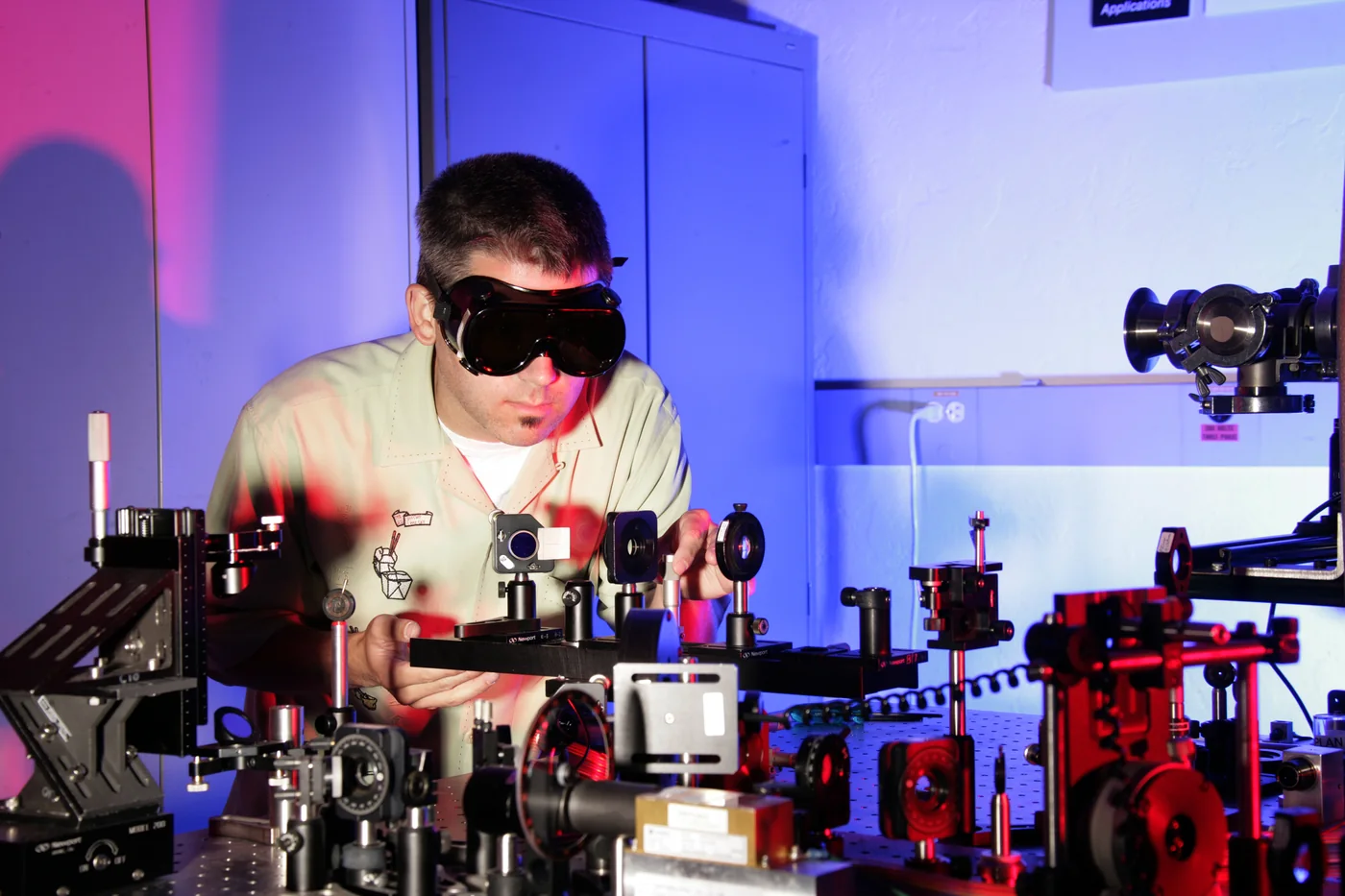
Alignment and loss
Optical systems reward precise paths, measurement, alignment, and loss budgets—an unusually physical analogy for traceable software and cognitive pipelines.
ENTER →Replication with variation
Biology and cloning distinguish copying from development: a replicated structure still operates inside an environment, accumulates state, and expresses constraints over time.
ENTER →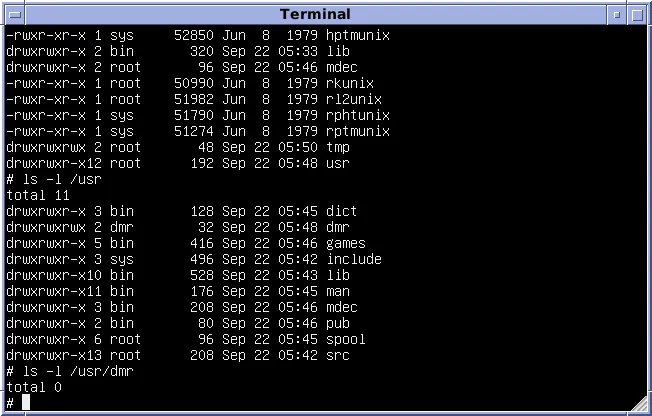
Composition and legibility
UNIX history demonstrates the compounding value of understandable parts, durable interfaces, and composition rather than monolithic mystery.
ENTER →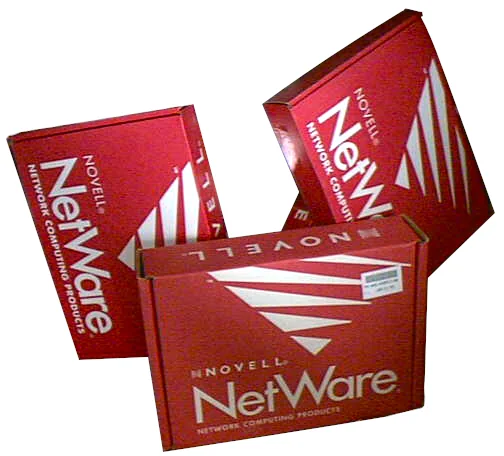
Administration as a system
Network operating systems made permissions, naming, clients, services, storage, and operational responsibility tangible long before cloud abstractions hid the machinery.
ENTER →The value of breadth is not collecting domains. It is recognizing structural analogies without pretending the domains are identical. The strongest transfer is a question: what does this older or neighboring system force an engineer to notice that a modern abstraction makes easy to forget?
What the founder seems to keep carrying forward
- A complete tool should not be silently replaced by a diminished substitute merely because the smaller package is convenient.
- A server should be reproducible enough that rebuilding it is an operation, not a séance.
- Security deserves a methodology, an evidence trail, and an attack-surface model—not a badge.
- Operating systems are cultures as much as kernels: defaults, documentation, licensing, release discipline, and administrator expectations shape the people who use them.
- Small machines are valuable because they force architecture to confront resource cost.
- A development environment can become a strategic advantage when it encodes the way an organization thinks.
The resulting style is neither retro worship nor futurism for its own sake. It is the habit of asking which old constraint taught something worth preserving, and which modern capability finally lets us implement the lesson properly.
Anonymity without distance
The founder keeps personal identity separate from the public technical record. The boundary is deliberate: readers can evaluate the architecture, products, demonstrations, documentation, and historical influences without requiring personal biography as a substitute for evidence.
Some people remember when six colors could make a computer feel like a culture. The useful part of that memory is not a trademark. It is remembering that technology can create belonging before anyone gives the community a formal name.
Educational service is part of the same story. The founder reports board-level and resource-donation work with a U.S. 501(c)(3) educational nonprofit supporting students who have fallen behind, including after disruptive events, with involvement from professors, universities, and community or faith-based aid organizations. The nonprofit is not named here in order to preserve the founder’s current privacy boundary.
Founder publications // arguments preserved as objects
The Work We Never Needed to Do
A 42-page essay connecting Voodoo2, UltraHLE, PowerVR, specialized silicon, representation changes, and computational exclusion to Xerxes SI.
ENTER →There Was Never an Expert in the Box
Why packaged software historically sold tools rather than expertise—and why persistent intelligence may shift computing from feature delivery toward intent, contextual teaching, institutional memory, trustworthy action, and human capability formation.
ENTER →Data Points Proof of Concept
A source-preserved benchmark report on first-day semantic formation: repeated four-surface recovery, architecture-level passage retrieval, product-graph reconstruction, evidence-status preservation, and explicitly scoped control comparisons.
ENTER →Keep exploring // human pathways
Continue through adjacent ideas, products, principles, and historical lineages. These pathways preserve the relationships in the underlying knowledge graph while keeping exploration natural for a human reader.
A broad, source-linked systems lineage behind XERXES SI: operating systems, networks, telephone infrastructure, hacker culture, radio, optics, acoustics, biology, security methodology, hardware, workstations, and the physical culture of technical discovery.
CONTINUE →publicationA Weekend With Python Does Not Make You Steve JobsA founder essay distinguishing tool familiarity and prototype cleverness from production intelligence, multidisciplinary synthesis, institutional reliability, evidence-based expertise, governance, and complete product delivery.
CONTINUE →publicationBeyond D2A founder research monograph that separates established receptor pharmacology and clinical safety signals from a falsifiable hypothesis: in a susceptible subgroup, 5-HT2A engagement may interact with D2/D3-mediated changes during dopamine-agonist treatment of prolactinoma to produce a distinct adverse cognitive state.
CONTINUE →publicationClean Systems WinA founder essay on structural literacy, security methodology, reverse engineering, institutional memory, KAIZEN, standards-first development, and why SIDE is intended to turn accumulated engineering knowledge into active development constraints.
CONTINUE →