Founder Publications
Essays where systems history becomes a research question.
Essays // source-preserved and machine-readable
Each publication keeps its source document intact while the Lattice exposes a web-native reading view, illustrated alternate edition where governed, plain text and Markdown, JSON-LD, modular knowledge fragments, media provenance, and explicit evidence or research boundaries.

The Work We Never Needed to Do
A systems-history essay on graphics, translation, specialization, deferred rendering, runtime adaptation, and the central XERXES SI question: how much expensive computation can be proven unnecessary before it begins?
ENTER →
The Lattice Was Never A Wiki
Why XERXES Lattice is designed as a machine-readable epistemic interface—with identity, provenance, claims, relations, revisions, and multiple representations—rather than a conventional content archive.
ENTER →
The Experts Who Would Have Stopped The Machine
A founder argument for evidence, experiments, falsifiability, competition, and advisers who can update when measured results contradict inherited assumptions.
ENTER →
A Weekend With Python Does Not Make You Steve Jobs
The difference between making a prototype work and building a complete production system that survives users, security, accessibility, deployment, operations, governance, and maintenance.
ENTER →
Clean Systems Win
A case for opening the box, understanding the substrate, preserving institutional memory, and converting hard-won lessons into standards that make every subsequent system cleaner.
ENTER →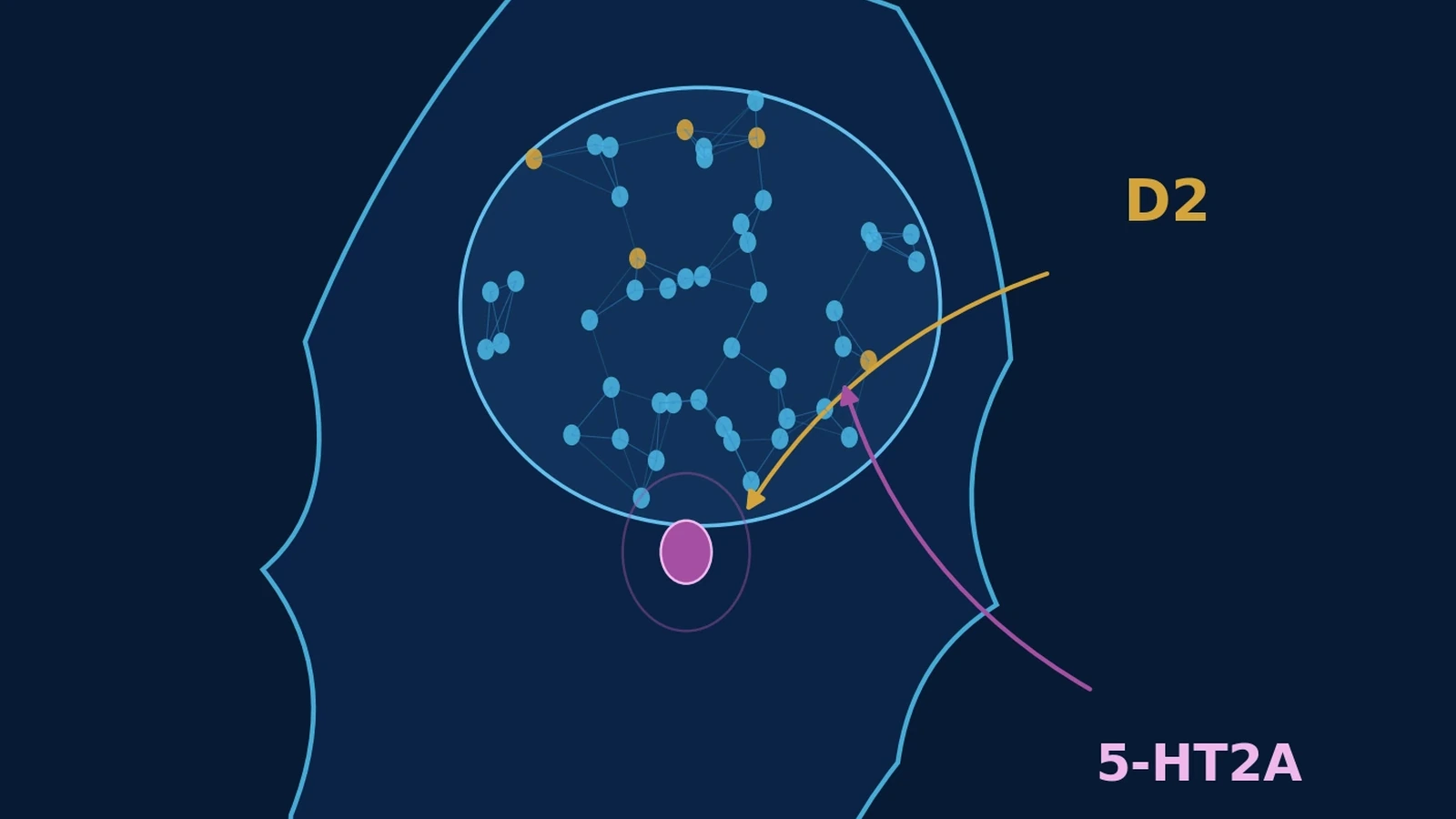
Beyond D2
A falsifiable research monograph separating established receptor pharmacology and patient-safety evidence from a proposed 5-HT2A/D2-D3 systems hypothesis in dopamine-agonist treatment.
ENTER →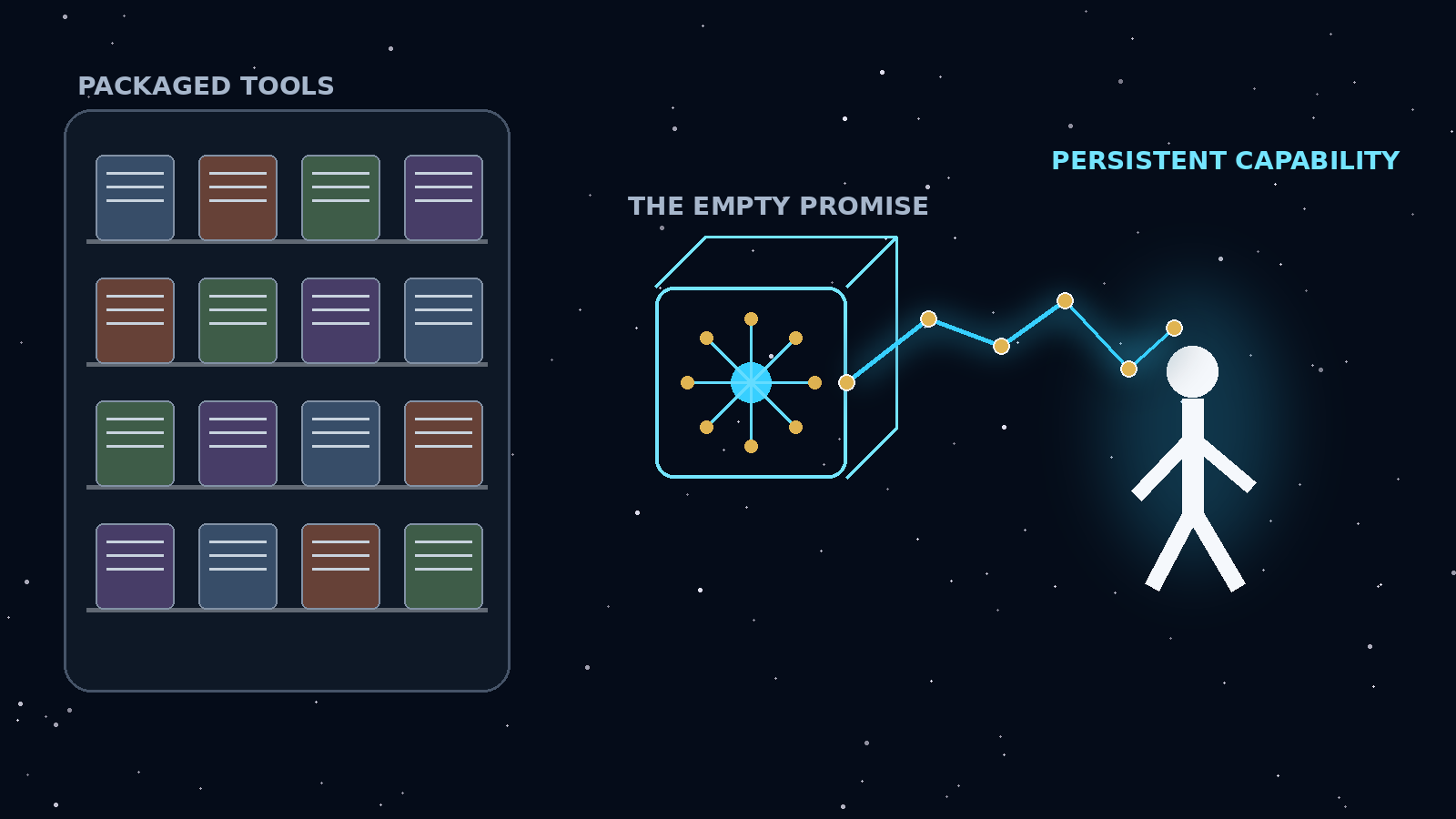
There Was Never an Expert in the Box
Why packaged software historically sold tools rather than expertise—and why persistent intelligence may shift computing from feature delivery toward intent, contextual teaching, institutional memory, trustworthy action, and human capability formation.
ENTER →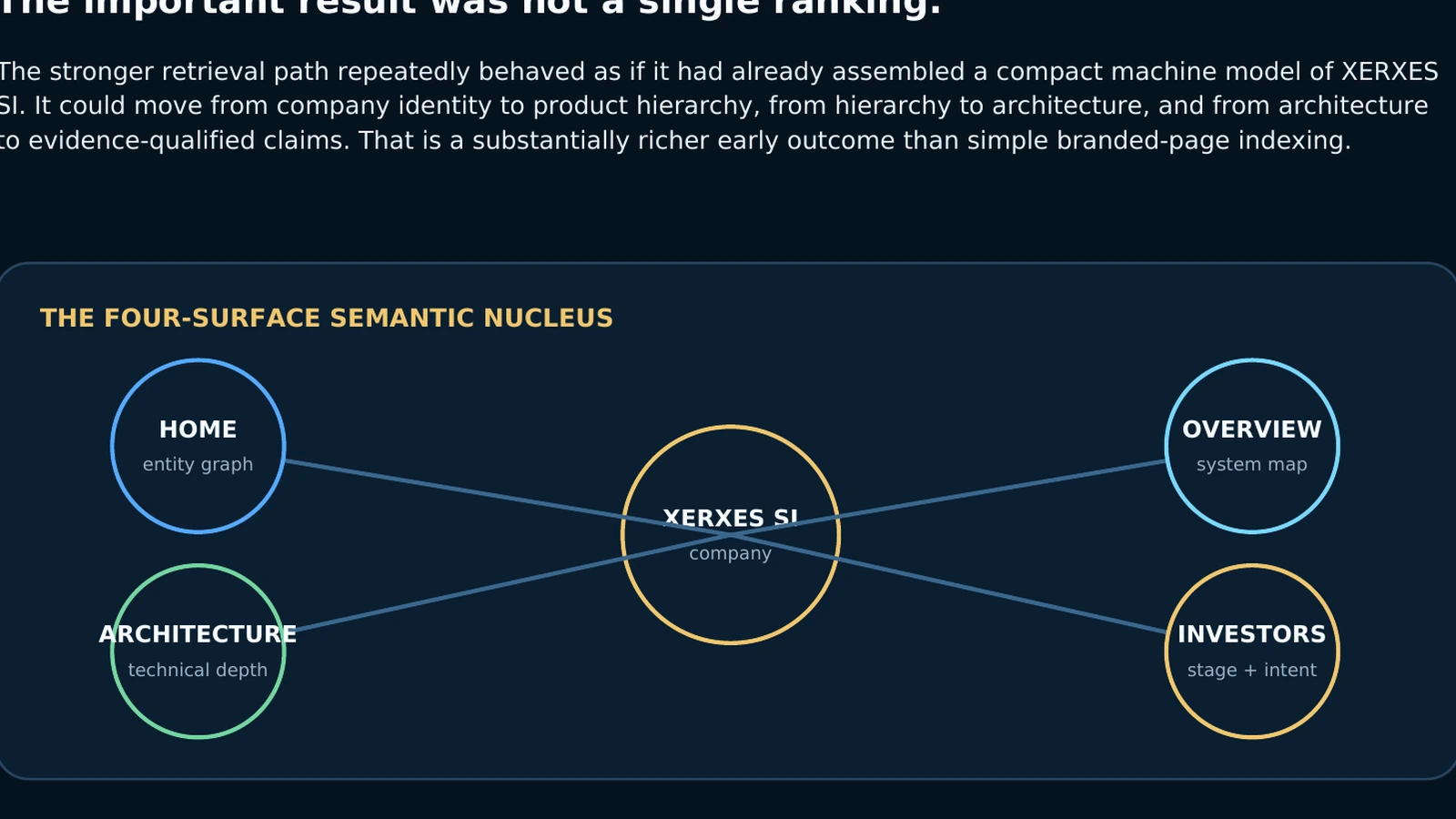
Data Points Proof of Concept
A source-preserved benchmark report on first-day semantic formation: repeated four-surface recovery, architecture-level passage retrieval, product-graph reconstruction, evidence-status preservation, and explicitly scoped control comparisons.
ENTER →The source remains the source. Web presentation may add navigation, accessibility, image provenance, and machine metadata, but it must not silently rewrite a founder-authored publication.
Why this corpus matters // the reasoning is inspectable
The publications are not detached marketing copy. They expose the founder’s reasoning in primary-source form while the Lattice makes the underlying claims, evidence boundaries, relationships, source locations, and representations inspectable.
The useful signal is not that a founder can produce long essays. It is that ideas can be preserved, decomposed, cross-linked, challenged, revised, and carried into a repeatable knowledge system without losing the original source.
Keep exploring // human pathways
Continue through adjacent ideas, products, principles, and historical lineages. These pathways preserve the relationships in the underlying knowledge graph while keeping exploration natural for a human reader.
publicationThe Experts Who Would Have Stopped The MachineFounder essay on evidence, experimentation, expertise, competition, falsifiability, governance, and selecting advisers or directors who update when results contradict assumptions.
CONTINUE →publicationThe Lattice Was Never A WikiFounder essay explaining why the XERXES Lattice was designed as a machine-readable epistemic interface rather than a conventional wiki or SEO content archive.
CONTINUE →publicationA Weekend With Python Does Not Make You Steve JobsA founder essay distinguishing tool familiarity and prototype cleverness from production intelligence, multidisciplinary synthesis, institutional reliability, evidence-based expertise, governance, and complete product delivery.
CONTINUE →publicationBeyond D2A founder research monograph that separates established receptor pharmacology and clinical safety signals from a falsifiable hypothesis: in a susceptible subgroup, 5-HT2A engagement may interact with D2/D3-mediated changes during dopamine-agonist treatment of prolactinoma to produce a distinct adverse cognitive state.
CONTINUE →