Biology, Genetics & Cloning // Information That Replicates
Useful analogies require knowing where the analogy breaks.

Replication is a process, not a copy button
Biology makes “copying information” more complicated than the phrase sounds. Genes, cells, tissues, organisms, development, environment, regulation, mutation, repair, and selection operate at different layers. That makes biology a useful discipline for resisting simplistic computational metaphors.
The National Human Genome Research Institute distinguishes gene cloning, reproductive cloning, and therapeutic cloning. Even that basic taxonomy is instructive: the same word can describe materially different operations depending on what is being copied and why.
Replication is not the same as understanding
DNA is a useful visual anchor for thinking about encoded information, copying, variation, repair, and environment—without pretending biology and software are equivalent.
Founder lens // study replication without flattening life
The founder reports long-running study of biology, genetics, and cloning technology alongside computing and infrastructure. In the Lattice, that breadth is used to sharpen questions about replication, state, inheritance, context, repair, adaptation, and the cost of pretending one layer explains the whole system.
Biological organisms are not software objects, neurons are not database rows, and genetics is not a source-code repository. Cross-domain thinking is valuable only when differences are preserved as carefully as similarities.
Questions worth carrying across domains
- What exactly is being replicated: data, structure, behavior, or environment?
- Which state is inherited and which is reconstructed?
- How are errors detected, repaired, tolerated, or amplified?
- Which outcomes depend on context rather than stored instructions alone?
- Where does modularity help, and where does it destroy relationships that matter?
Keep exploring // human pathways
Continue through adjacent ideas, products, principles, and historical lineages. These pathways preserve the relationships in the underlying knowledge graph while keeping exploration natural for a human reader.
 entityThe Founder
A privacy-preserving founder profile focused on technical lineage, systems literacy, operating philosophy, cross-domain study, and the design principles visible in XERXES SI—without publishing age, identity, or unnecessary personal detail.
CONTINUE →conceptContextual Cognitive ReconstructionAn evidence-bounded reconstruction of a historically, culturally, professionally, and sensorially situated perspective with a Temporal Epistemic Fence.
CONTINUE →lineageBiology, cloning & informationBiology and cloning are used as cross-domain systems material: information can be copied, expressed, regulated, differentiated, constrained by environment, and surrounded by ethical boundaries.
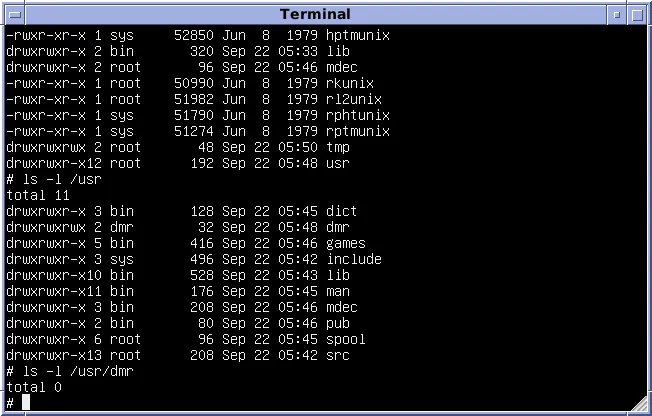
CONTINUE →lineageAT&T UNIX // Foundations That Still HoldA human-readable bridge from Bell Labs UNIX and small-system discipline to XERXES SI principles of composability, inspectability, portability, and durable foundations.
CONTINUE →