AT&T UNIX // Foundations That Still Hold
Build high only after learning why the ground stayed standing.

UNIX // small enough to understand, consequential enough to endure
UNIX matters here not because old software is automatically good, but because an unusually small set of ideas—hierarchical files, processes, pipes, composable tools, portable C, textual interfaces, and a culture of direct inspection—became a foundation under decades of computing.
Computer History Museum records Ken Thompson and Dennis Ritchie creating UNIX at Bell Telephone Laboratories in 1969. The system moved from the PDP-7 to the PDP-11 and was later rewritten in C, helping it become portable across different hardware. That history is a compact lesson in reducing a complicated ambition until its structure becomes durable.
UNIX as an inspectable foundation
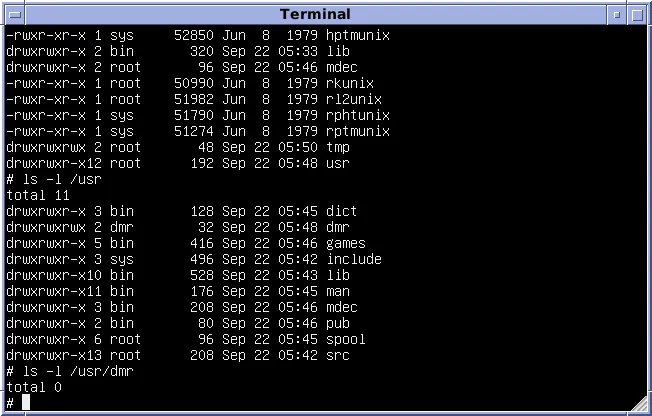
Version 7 Unix in a PDP-11 emulator: a small, legible environment whose lineage still reaches into modern systems.
,_exhibited_at_Living_Computer_Museum_in_Seattle,_USA_(edited_image_without_background).jpg)
PDP-11/70 // the machine beneath the abstraction
A DEC PDP-11/70, representative of the hardware lineage on which early UNIX matured and a useful reminder that operating-system ideas began under visible physical constraints.
Founder signal // preserve contact with the substrate
The founder reports keeping an actual AT&T UNIX system or historical UNIX installation/artifact in his possession and returning to that lineage as a reminder that modern abstraction rests on physical machines, operating constraints, protocols, documentation, and choices made by people.
The point is not to live in the past. The point is to retain enough contact with the past that the upper layers of a future system do not forget what makes the lower layers trustworthy.
Historical literacy earns its place only when it sharpens present engineering: fewer hidden assumptions, clearer interfaces, better failure behavior, stronger recovery, and more intentional abstraction.
What carries into XERXES
XERXES Lattice applies the same general instinct to knowledge: one canonical object can have HTML, Markdown, JSON-LD, search, sitemap, and relational representations. The interface may evolve; the identity and contract should survive it.
Keep exploring // human pathways
Continue through adjacent ideas, products, principles, and historical lineages. These pathways preserve the relationships in the underlying knowledge graph while keeping exploration natural for a human reader.
 entityThe Founder
A privacy-preserving founder profile focused on technical lineage, systems literacy, operating philosophy, cross-domain study, and the design principles visible in XERXES SI—without publishing age, identity, or unnecessary personal detail.
CONTINUE →principleReproducible Modular WorkflowThe XERXES founder philosophy that systems should be reproducible, modular, checkpointed, evidence-bearing, and resistant to one-off server craftsmanship.
CONTINUE →principleCivilization Design // Build the Ground Before the SkylineA founder-derived principle for designing coherent systems that combine durable foundations, simplicity, efficiency, effectiveness, beauty, human purpose, and long-horizon responsibility.
CONTINUE →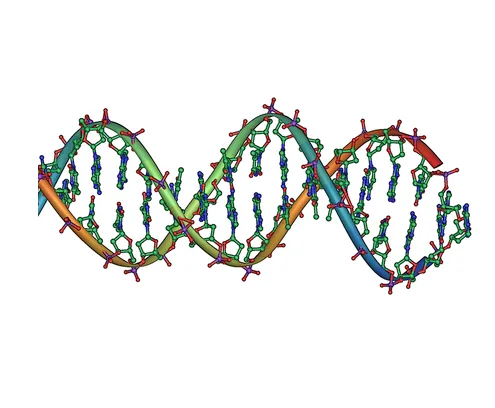 lineageBiology, Genetics & Cloning // Information That Replicates
A careful bridge from genetics and cloning to systems questions about replication, variation, repair, environment, and information—without reducing biology to software metaphors.
CONTINUE →