Civilization Design // Build the Ground Before the Skyline
Beauty without structure is decoration. Structure without humanity is infrastructure nobody should want.
Design the civilization around the capability
Civilization design is the founder’s term for thinking beyond a feature, page, model, server, or product. It asks whether the pieces reinforce one another across time: information architecture, visual language, software boundaries, infrastructure, security, documentation, economics, community, physical constraints, and the human experience of using the system.
The skyline is only as ambitious as the ground is trustworthy.
Six forces that should reinforce one another
Why technical history belongs in future design
The founder’s interest in UNIX, BSD, OpenSSH, Slackware, BeOS, NetWare-era networking, telephone infrastructure, radio, acoustics, optics, biological information, workstation culture, old hardware, and modern heterogeneous compute is organized around one claim: foundations are easiest to forget after abstraction becomes comfortable.
Study the past deeply enough to know which constraints disappeared, which were merely hidden, and which principles survived because they were good. Then build the future without turning history into a cage.
- Preserve explicit identities and boundaries.
- Prefer modular systems whose parts can be inspected and replaced.
- Treat documentation, provenance, and recovery as product features.
- Use visual coherence to make structure easier to understand.
- Do not confuse novelty with progress.
- Measure efficiency as a first-class design quality.
- Keep the system useful to humans even when machines can consume it directly.
XERXES Lattice as a small proof of the principle
This wiki is intentionally both a human publication and a modular data system. The same governed knowledge objects drive pages, Markdown, JSON-LD, search, sitemaps, related pathways, media credits, and Worker routes. The design objective is not to choose between beauty and structure; it is to make each expose the quality of the other.
Keep exploring // human pathways
Continue through adjacent ideas, products, principles, and historical lineages. These pathways preserve the relationships in the underlying knowledge graph while keeping exploration natural for a human reader.
 entityThe Founder
A privacy-preserving founder profile focused on technical lineage, systems literacy, operating philosophy, cross-domain study, and the design principles visible in XERXES SI—without publishing age, identity, or unnecessary personal detail.
CONTINUE →productXERXES LatticeA governed, human-first and machine-readable knowledge system: stable modular objects become visual articles, Markdown, JSON-LD, search, source bridges, media registries, sitemaps, and navigable relations without duplicating the truth by hand.
CONTINUE →principleFoundation Before EchelonA XERXES design principle: preserve the lessons of foundational systems so advanced layers remain legible, efficient, repairable, and worthy of the civilization that depends on them.
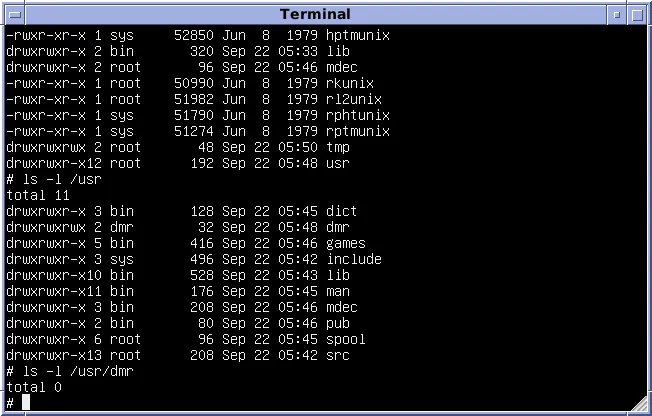
CONTINUE →lineageAT&T UNIX // Foundations That Still HoldA human-readable bridge from Bell Labs UNIX and small-system discipline to XERXES SI principles of composability, inspectability, portability, and durable foundations.
CONTINUE →