
OpenBSD + OpenSSH
Make the dangerous path harder. Remove attack surface. Audit what remains.

Historical context
OpenBSD is known for security-focused engineering, code review, careful defaults, and integrated documentation. OpenSSH grew from freely licensed early SSH code, debuted in OpenBSD 2.6 in 1999, and became portable infrastructure used far beyond OpenBSD itself.
OpenBSD // security culture made visible
An OpenBSD 7.0 desktop: visually spare, operationally explicit, and representative of a project culture that treats documentation, auditing, correctness, and secure defaults as one system.
The deeper lesson is organizational: security is not one feature toggled at the edge. It emerges from reducing unnecessary code and privilege, auditing boundaries, using safer defaults, and treating documentation as part of the system.
Founder memory // secure shell as a design statement
The founder remembers OpenBSD and OpenSSH as an important security-era lesson: a secure shell was not merely a feature but an operational replacement for older remote-login habits, backed by code review, privilege separation, conservative defaults, and a culture willing to reduce attack surface.
OpenSSH emerged from the OpenBSD project in 1999 and became a widely portable secure remote-login suite. The lasting design signal is that security gains credibility through method, review, boundary reduction, and operational replacement—not through a label attached after the system is built.
Security without visual theater
The founder reports hands-on use and study of OpenBSD and OpenSSH as part of his systems and security formation.
OpenSSH is one of the great reminders that infrastructure can become invisible precisely because it is dependable. The XERXES lesson is not “copy OpenBSD.” It is to design so that privilege, complexity, and exposed surface have to justify themselves.
Founder lens
OpenSSH is one of the great reminders that infrastructure can become invisible precisely because it is dependable. The XERXES lesson is not “copy OpenBSD.” It is to design so that privilege, complexity, and exposed surface have to justify themselves.
What carries into XERXES
Keep exploring // human pathways
Continue through adjacent ideas, products, principles, and historical lineages. These pathways preserve the relationships in the underlying knowledge graph while keeping exploration natural for a human reader.
A broad, source-linked systems lineage behind XERXES SI: operating systems, networks, telephone infrastructure, hacker culture, radio, optics, acoustics, biology, security methodology, hardware, workstations, and the physical culture of technical discovery.
CONTINUE →lineage2600 community2600 and earlier phone-phreaking stories sit inside a broader hacker lineage: curiosity about systems, telecommunications literacy, public discussion, community, and the ethical question of what responsible exploration should become.
CONTINUE →lineageAcoustics + sound systemsAcoustics is cross-domain systems engineering: pressure waves become measurements, electrical signals, digital representations, room behavior, interfaces, speech, music, alerts, and subjective experience.
CONTINUE →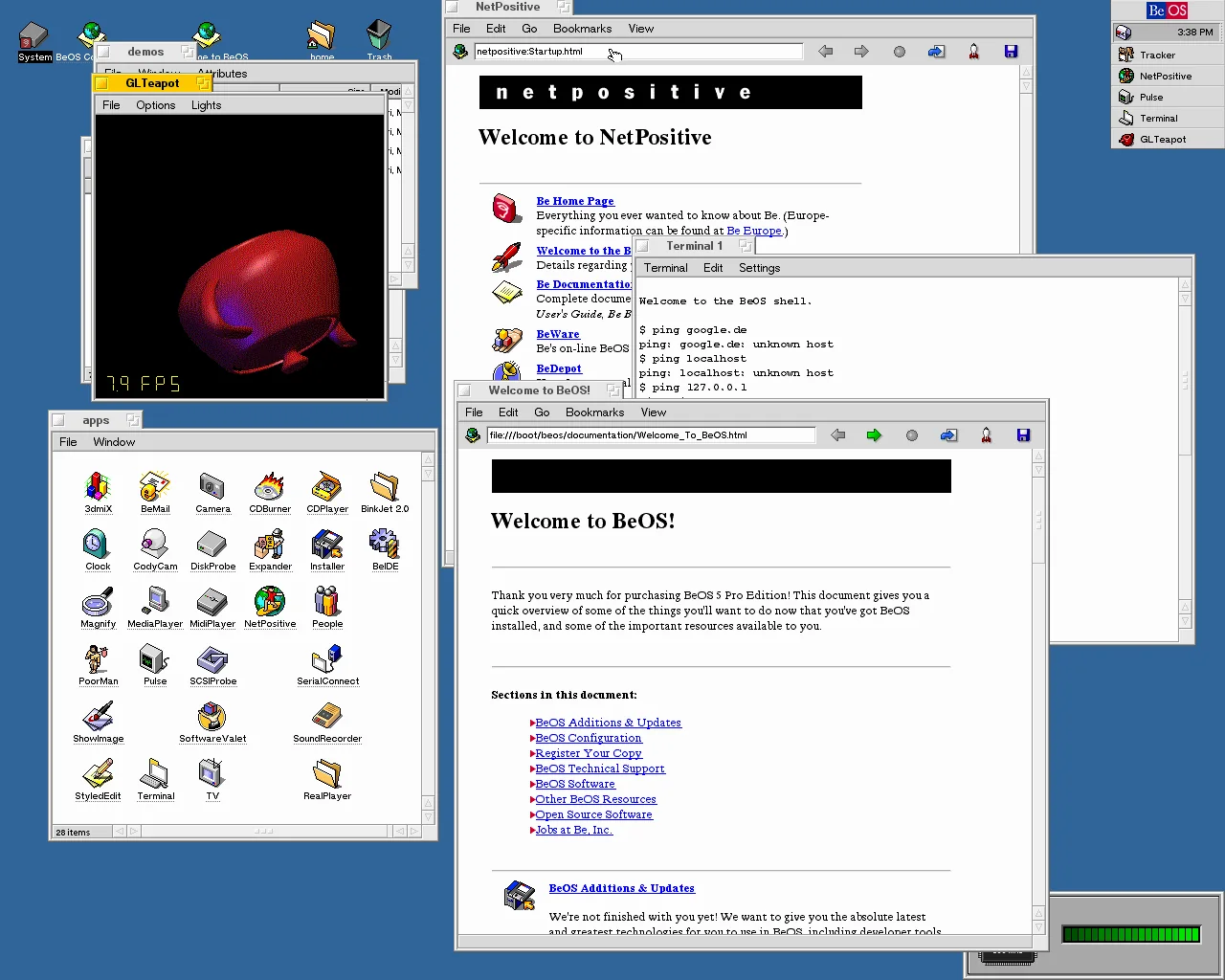 lineageBeOS
BeOS is preserved as an alternative-systems case study: a multimedia-oriented, multiprocessing desktop that made responsiveness and coherence visible when the personal-computing mainstream was taking other paths.
CONTINUE →