Acoustics + sound systems
Sound sits between physics, measurement, electronics, computation, spaces, and human perception.
The signal has a physical definition before it has a feeling
NIST describes acoustical measurement in terms of pressure fluctuation, while also noting that measurement is often motivated by human responses such as loudness or annoyance. That bridge—from a physical signal to subjective experience—is exactly why sound is such a useful systems domain.
Microphones, calibration, room reflections, frequency response, dynamic range, coding, playback systems, and human hearing all influence the result. “It sounds wrong” may be true, but engineering begins when the layers become measurable.
Founder lens // subjective experience still deserves instrumentation
The founder reports studying sound and audio technology alongside computing, communications, and physical systems.
Sound taught me that a system can be rigorously measurable and still end in human experience. That is not a contradiction. It is a warning that the last mile of engineering may be perceptual.
What carries forward
The Lattice’s affective and cognitive-context concepts use a related discipline: subjective context is not reduced to a number, but it also is not treated as unknowable. It is modeled explicitly enough to reason about.
Keep exploring // human pathways
Continue through adjacent ideas, products, principles, and historical lineages. These pathways preserve the relationships in the underlying knowledge graph while keeping exploration natural for a human reader.
A broad, source-linked systems lineage behind XERXES SI: operating systems, networks, telephone infrastructure, hacker culture, radio, optics, acoustics, biology, security methodology, hardware, workstations, and the physical culture of technical discovery.
CONTINUE →lineageSound systems & recorded mediaSound technology is used as a bridge between physical signal chains, information representation, timing, transducers, recording media, compression, and human perception.
CONTINUE → entityThe Founder
A privacy-preserving founder profile focused on technical lineage, systems literacy, operating philosophy, cross-domain study, and the design principles visible in XERXES SI—without publishing age, identity, or unnecessary personal detail.
CONTINUE →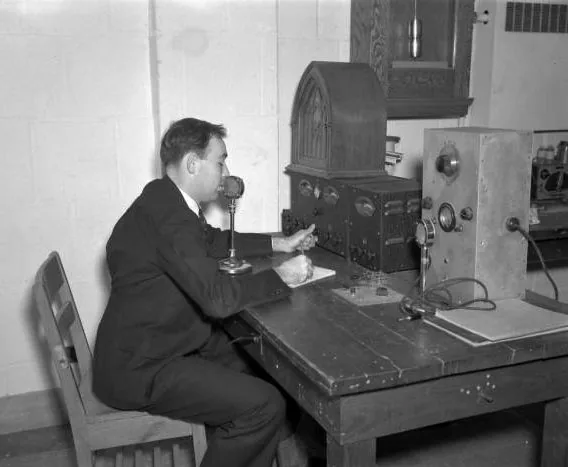 lineageSignals // Radio, Sound, Lasers & Optical Systems
A cross-domain systems article connecting radio, acoustics, laser and optical technologies through signal, channel, noise, bandwidth, alignment, calibration, and observability.
CONTINUE →