Slackware Linux
Unix-like directness without pretending change is always progress.
Historical context
Slackware began in 1993 and became known for a conservative development model, straightforward Unix administration, and reluctance to replace stable components without a compelling reason.
Founder memory // the machine should remain legible
The founder remembers Slackware Linux for the energy of a system that expected the operator to understand what was installed, where configuration lived, and what the machine was actually doing.
Slackware’s own philosophy describes simplicity and stability as paramount while retaining a strong UNIX-like tradition. In the Lattice, that becomes a design check against replacing explicit structure with cleverness that only the tool itself can explain.
Founder lens
I value systems that do not confuse convenience with invisibility. Slackware asks the operator to know what the machine is doing. That can be less fashionable and more educational. The lesson carried into XERXES is that explicit state beats magical state when reliability matters.
What carries into XERXES
Keep exploring // human pathways
Continue through adjacent ideas, products, principles, and historical lineages. These pathways preserve the relationships in the underlying knowledge graph while keeping exploration natural for a human reader.
A broad, source-linked systems lineage behind XERXES SI: operating systems, networks, telephone infrastructure, hacker culture, radio, optics, acoustics, biology, security methodology, hardware, workstations, and the physical culture of technical discovery.
CONTINUE →lineage2600 community2600 and earlier phone-phreaking stories sit inside a broader hacker lineage: curiosity about systems, telecommunications literacy, public discussion, community, and the ethical question of what responsible exploration should become.
CONTINUE →lineageAcoustics + sound systemsAcoustics is cross-domain systems engineering: pressure waves become measurements, electrical signals, digital representations, room behavior, interfaces, speech, music, alerts, and subjective experience.
CONTINUE →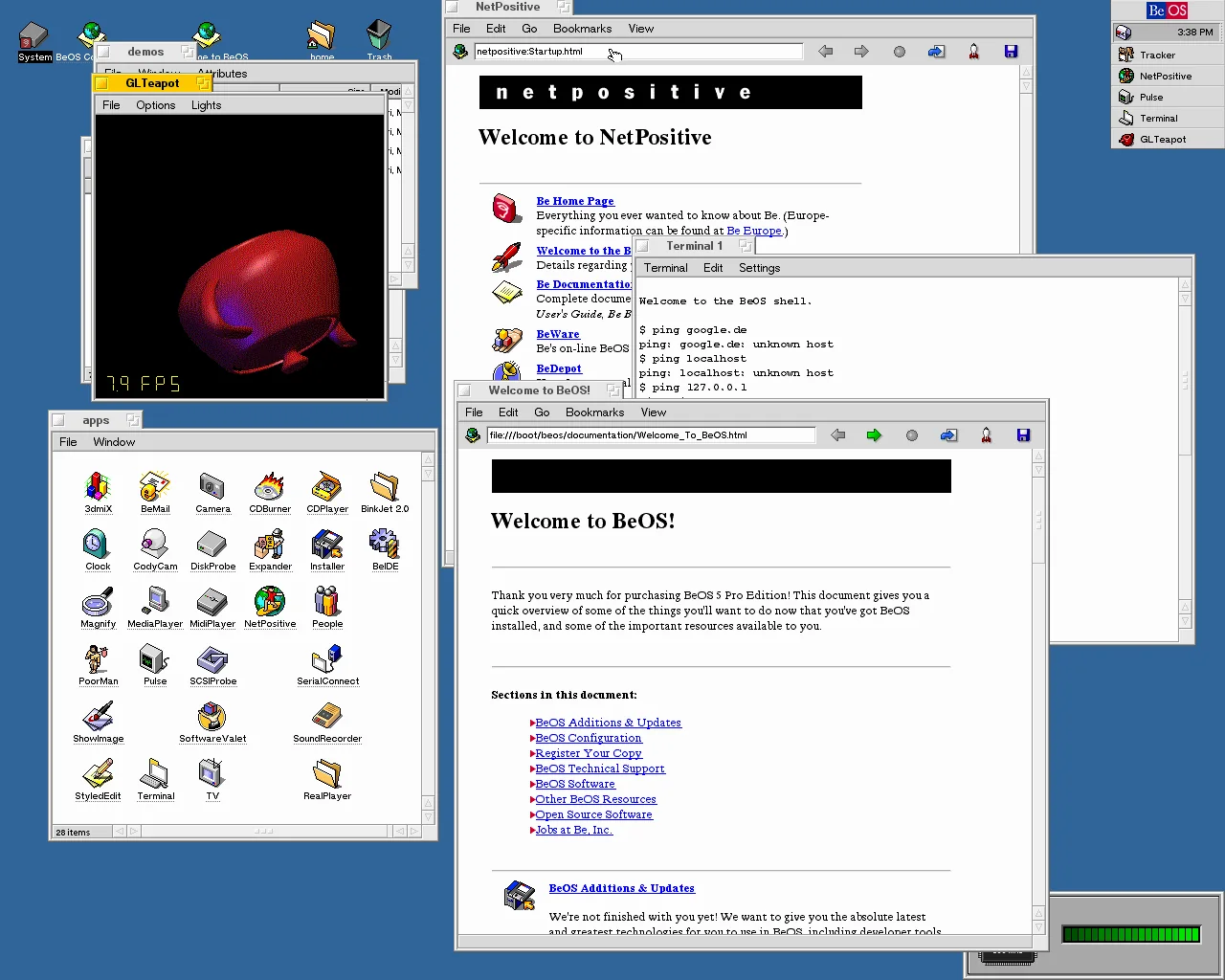 lineageBeOS
BeOS is preserved as an alternative-systems case study: a multimedia-oriented, multiprocessing desktop that made responsiveness and coherence visible when the personal-computing mainstream was taking other paths.
CONTINUE →