Debian
A community distribution built around explicit policy, package discipline, and long memory.
Historical context
Debian was announced in 1993 and developed into a community-maintained operating system with unusually explicit project governance, packaging conventions, and documentation.
Founder lens
Debian taught a different lesson from Slackware: scale does not require abandoning discipline. The existence of both full and compact tool variants—such as standard Vim and vim-tiny—also makes a useful principle visible: small is a valid choice, but small should not silently impersonate complete.
What carries into XERXES
Keep exploring // human pathways
Continue through adjacent ideas, products, principles, and historical lineages. These pathways preserve the relationships in the underlying knowledge graph while keeping exploration natural for a human reader.
A broad, source-linked systems lineage behind XERXES SI: operating systems, networks, telephone infrastructure, hacker culture, radio, optics, acoustics, biology, security methodology, hardware, workstations, and the physical culture of technical discovery.
CONTINUE →lineage2600 community2600 and earlier phone-phreaking stories sit inside a broader hacker lineage: curiosity about systems, telecommunications literacy, public discussion, community, and the ethical question of what responsible exploration should become.
CONTINUE →lineageAcoustics + sound systemsAcoustics is cross-domain systems engineering: pressure waves become measurements, electrical signals, digital representations, room behavior, interfaces, speech, music, alerts, and subjective experience.
CONTINUE →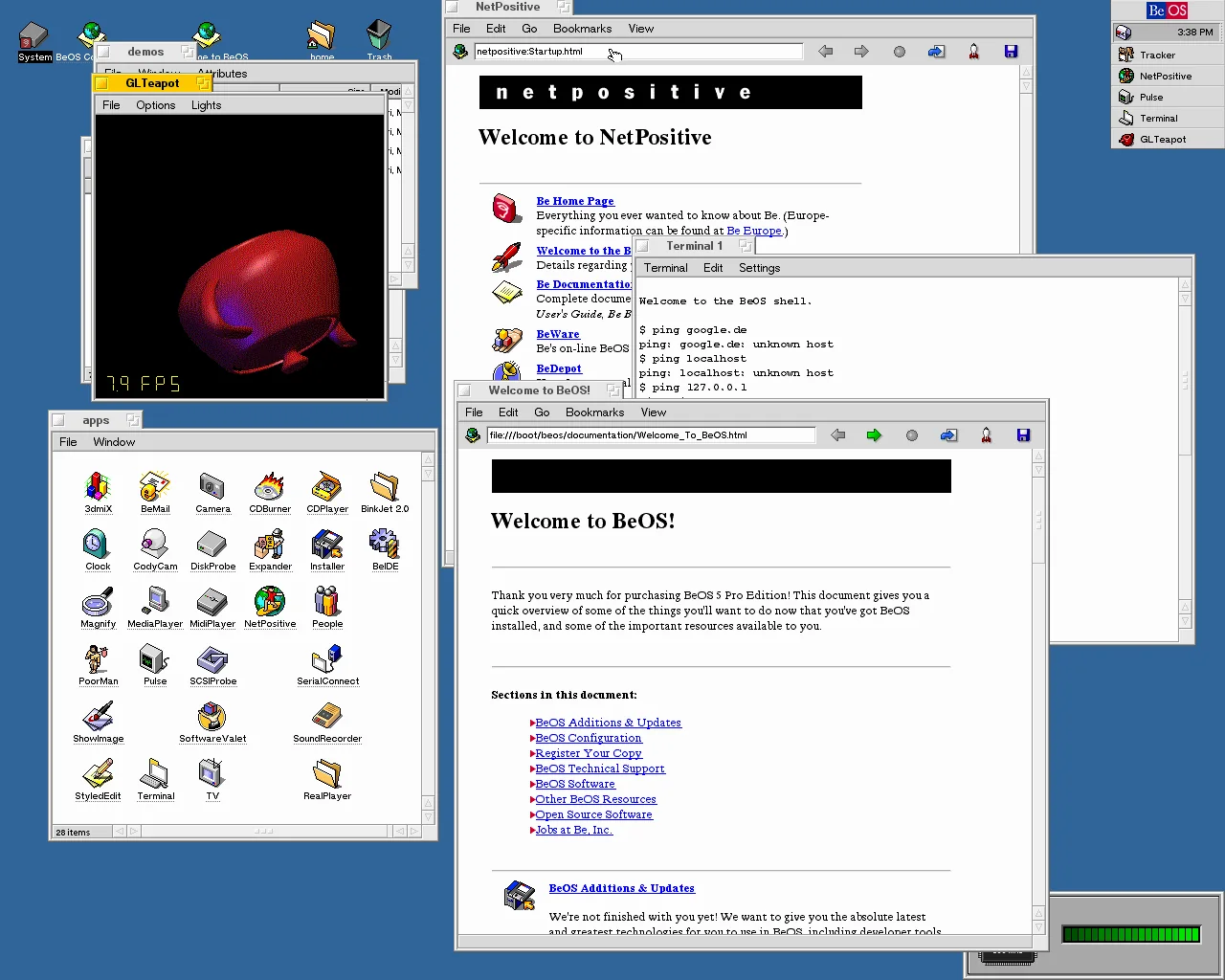 lineageBeOS
BeOS is preserved as an alternative-systems case study: a multimedia-oriented, multiprocessing desktop that made responsiveness and coherence visible when the personal-computing mainstream was taking other paths.
CONTINUE →